

 Приказ о проведении
 Положение
 Выписка из Протокола
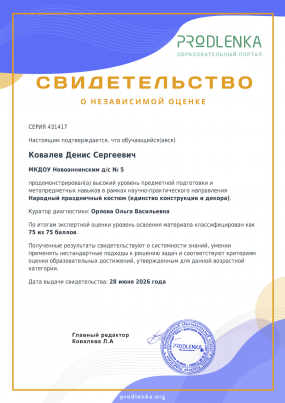
 Диплом победителя
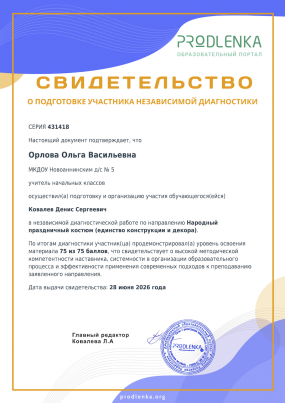
 Диплом за инновационную деятельность
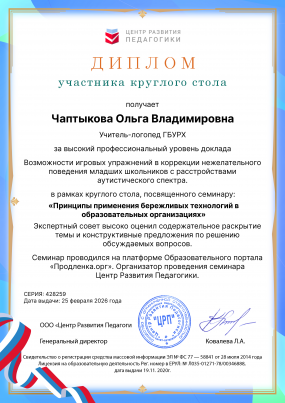
 Благодарность


План урока ознакомления с теоретическим материалом и практического применения знаний по написанию креативной поэзии в жанре «синкан» на уроках английского языка и во внеурочной деятельности
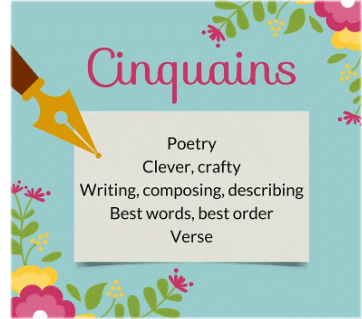
План урока
ознакомления с теоретическим материалом
и практического применения знаний
по написанию креативной поэзии в жанре
«синкан» на уроках английского языка
и во внеурочной деятельности
Подготовила Олейник Л.Я., учитель английского языка
МБОУ «Новотроицкая школа №4»
администрации Волновахского района, ДНР
LESSON PLAN
Topic: Cinquain Poetry
Objectives/ learner outcomes:
Students will:
recognize the defining characteristics of a cinquain
look for sensory words that describe the image in the poem
write their own cinquain
describe the basic conventions of cinquain
interpret examples of cinquain
characterize the relationship between structure and meaning in cinquain
write their own cinquain that describes a familiar person, place, or thing
Students will develop:
Recording data in a chart
Listening comprehension
Creative Writing
Reading
Speaking on topic
Using computer and the Internet
Teaching strategies/ activities:
Oral
Group brainstorming
Pair work
Independent writing
Teacher One on One for Assessment
Materials/resources:
Overhead projector or multimedia board , Looking at Cinquains worksheet, Hand Model Graphic Organizer (for brainstorming),Student Reproducible Cinquain Graphic Organizer, glue, pictures, thick paper for final copies
Lesson Type: language art improving
PROCEDURES:
Introduction:
Ask if anyone knows what a Cinquain is. Introduce Cinquain poetry. (You may use the HO with printed Cinquain poetry written by your former pupils or students from the English-speaking countries or use the overhead presentation on topic)
B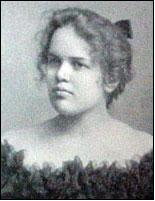 ody:1.Tell the students what the definition of a Cinquain is.
A cinquain – which, by the way, is pronounced “sin-cane,” not “sin-kwane” – is a form of poetry that is very popular because of its simplicity. It was created by American poet Adelaide Crapsey about 100 years ago, and is similar to Japanese poetic forms, such as haiku and tanka.
Cinquains are just five lines long, with only a few words on each line, making them easy to write. The first and last lines have just two syllables, while the middle lines have more, so they end up with a diamond-like shape, similar to the poetic form called the diamante.
2 .As a group, look at sample Cinquains on an overhead projector. The first example reads as follows:
Penguin
Black , white
Waddling, swimming, leaping
A tuxedo in the cold water
Emperor
3. Read the poem aloud. Ask students to look closely at the poem, and tell the teacher something that is different about this poem.
No rhyming.
Short lines, long lines, then short lines again.
Students should be able to extract the basic elements of these poems. You might lead students through the exploration process by asking them to think aloud about these questions:
•How many lines do these poems have?
•What do you notice about the words on the first line? (second, third, etc.)
•Which words seem most important to each poem, and why?
•How do the lines relate to each other?
•How does the structure (the organization of the lines) relate to the meaning? If you rearrange the words, how does the meaning change?
4. Pass out the Looking at Cinquains worksheet. Have each student take a copy, and then pass the other sheets across the row.
Have the students work together as a group.
5. Ask students to close their eyes and to paint a picture of what they hear in their mind as you read the poem to this once again. Prompt them with questions:
Can you see the Arctic Ocean, the cold water, the cute penguins in their black and white suits?
Can you visualize the behavior and actions of the penguins?
6.Ask students how the poem makes them feel. Relaxed, peaceful?
Using the overhead projector, have the students help circle the words that create this feeling.
7. Again have students close their eyes, and tell you what image they see in their mind as you read another poem.
D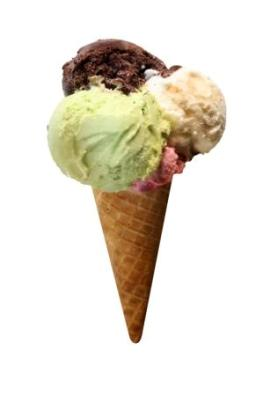 essert
Cold, creamy
Eating, giggling, licking
Cone with three scoops
Ice cream
8. Again, ask the students how this poem makes them feel, and choose a child to describe how this particular poem makes him/her feel.
Look at the next example, and repeat the steps for poem one and two.

Party
Happy, cheerful
Singing, eating, playing
My tenth birthday party
Celebration
Getting Started
T: First, you need to select a topic. That is, you need to choose something to write your cinquain about. Here are a few easy places to get ideas:
•Write about your favourite thing
•Write about something you don’t like
•Write about something you see around you
•Write about something that happens to you
Students will choose a picture from several pictures spread out on a table. They will use the picture to help them create a cinquain of their own. (Dismiss students’ one row at a time to maintain order.) Allow each group two minutes to choose a picture.
Brainstorming ideas
T: Once you know what you are going to write about, you need to brainstorm ideas about your topic. Think of as many things as you can and write them down on a piece of paper. It’s okay to fill the Graphic Organizer with your ideas and then write your poem on another piece of paper.
For example, I know several things about ice cream, so I’ve put them down here:
•It is cold.
•It is yummy.
•It is sweet.
•I like eating it.
These are just four ideas, but they are not yet a poem. To turn these ideas into a cinquain poem, we need to say them in a way that we have five lines according to the rules of the cinquain poetry.
What Are You Going to Write?
T: Now it’s your turn to try writing your own cinquain. Here are a few things to remember as you write:
•Cinquain poems can be written about anything
•They are five lines long
•Brainstorm ideas first
•“Center” your poem on the page
•Rhyme if you want to
•Have fun!
To make the work more manageable for students as they write their own cinquain,students can use the Student Reproducible Cinquain Graphic Organizer:
Line 1: a one-word title, a noun that tells what the poem is about
Line 2: two adjectives describing the title
Line 3: three -ing action verbs
Line 4: a related phrase
Line 5: a synonym for the title
to compose original poems of their own. Students can work individually, with partners, or in small groups. Once students have finished their poems, the cinquains can be shared with the entire class.
EXTENSIONS
Make staple books out of the students’ cinquain.
Illustrate the cinquain on a sheet of paper with colored pencils or fine-line markers.
Create a bulletin board or school Website anthology of your cinquain.
Prepare the visualizing in Power Point Presentation and post it on You Tube
to share with your friends and relatives.
Student assessment/reflections
While students work, use kid watching techniques to observe and monitor students' progress.
•Once the activity is complete, provide verbal feedback as individuals or groups share their work with the class. Commentary might focus on the students' feelings about the person, place, or thing described in the cinquain (e.g., "Your poem suggests that you really love your dog. Was it hard to choose just what to say in just five lines?), particularly interesting word choice (e.g., "You choose the word ornery to describe your dog. That's a word that means 'stubborn or cranky.' Can you tell me something ornery that your dog has done recently?"), and your own reaction or connection to the poems (e.g., "Your poem reminds me of my first dog, Taffi. Especially when you say that your dog is "a playful bundle of trouble." That's a good description of a puppy.")
•After students have shared their cinquain with the class, they could reflect on their own and their classmates’ poems.
•Students could discuss their reactions out loud or use the Cinquain Reflections Worksheet to record their thoughts.
Assessment of student learning:
Diagnostic: Ask students if they know what a cinquain is?
Formative: Observation of students during group participation. Students rough draft.
Summative: Students' final copy of their cinquain. Cinquain is well developed and follows the pattern.












Чтобы оставлять комментарии, вам необходимо авторизоваться на сайте. Если у вас еще нет учетной записи на нашем сайте, предлагаем зарегистрироваться. Это займет не более 5 минут.