

 Приказ о проведении
 Положение
 Выписка из Протокола
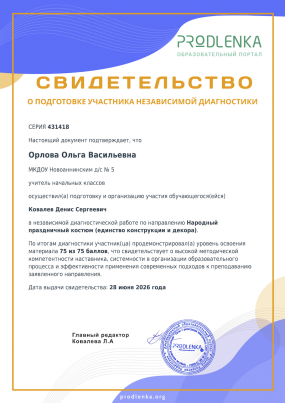
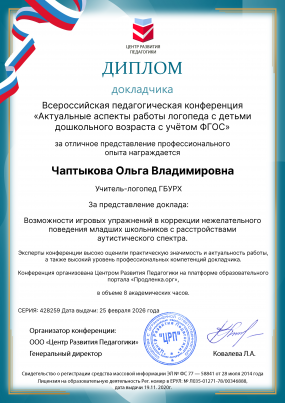
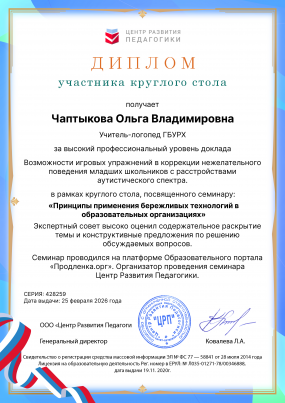
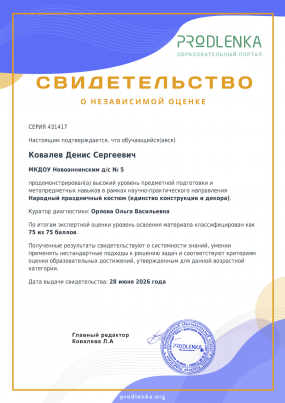
 Диплом победителя
 Диплом за инновационную деятельность
 Благодарность


“Primary school education in different countries.”
Krasnomayskaya Secondary School named after S.F. Ushakov.
“Primary school education in different countries.”
The project is performed by
the students of 8 A and 8 B forms:
Anastasiya Oborina
Tatiana Gapenko
Aleksandr Zhokhov
Aleksandr Marshalov
The English teacher is
E.A.Khrenkova
Krasnomayskiy
2025
Contents.
Introduction……………………………………………………………..3
Primary school education in Germany…………………………………5
Primary school education in the USA………………………………….7
Primary school education in France…………………………………….8
Primary school education in China………………………………….…10
Peculiarities and similarities of primary education in Germany, France,
China and the USA………………………………………………….…..12
Conclusion……………………………………………………………….15
The survey…………………………………………………………….....16
The charts……………………………………………………....…….…17
References……………………………………………………………….18
Introduction.
This project is on primary school education in different countries.
Having studied the educational system of the United Kingdom which is considered to be one of the best in the world, we became interested in the educational systems of other countries and started with the primary level as the key level of education in all nations of the world.
Education is one of the most powerful things in life. It gives us an understanding of the world around us and offers us an opportunity to use the knowledge wisely.
The main aimof the research is to get to know more about primary education in Germany, France, China and the USA and make a comparative table paying more attention to some peculiarities in order to use it at the English lessons.
The object of the research is primary school education in Germany, France, China and the USA.
The subject of the research is peculiarities of primary education in Germany, France, China and the USA .
The tasks are to find out information from books and the Internet, to compare it and to find peculiarities or differences of primary education in these countries and make a presentation of results.
The research questions:
At what age do children start going to school?
When does the school year start and finish?
Is there any school uniform?
How many semesters or terms are there?
The duration of summer holidays.
What is the system of grades? Do children get any marks at primary school?
How many pupils are there in a class?
How many subjects do children study? What are they?
Do they have any extra-curricular activities?
How long is each lesson?
How long is a school day?
Do parents pay for education?
How many days a week do they study?
Do they have a lot of homework?
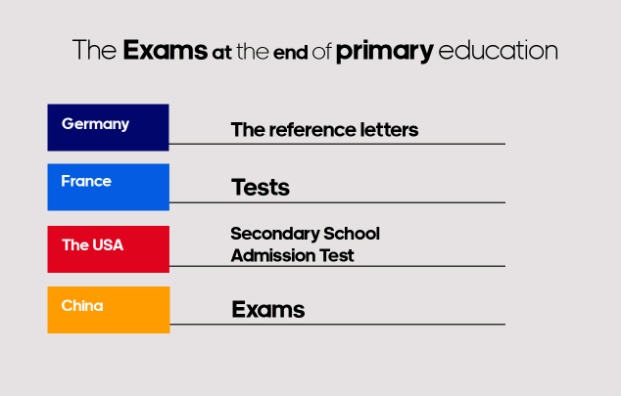
Do children take any exams after primary school?
Peculiarities of primary school education.
Primary school education in Germany.
Education in Germany, both public and private is funded by the government and is therefore mostly free. The school year starts around mid-August/September and ends around 1 July.The first day of primary school is a very important event for German children. Customs include giving children a bag of sweets on their first day of school.
There are generally six weeks over the summer holidays. To avoid chaos on the roads, school holidays in Germany work on a staggered rota system, according to federal state.
In Germany there is no single school uniform. Some schools have introduced a single school uniform, but students can discuss its fashion.
Traditionally, the German school day starts at 8:00 a.m. and finishes at 2:00 p.m.. Schools in Germany offer study hours for homework (homework in Germany is considered to be very important). There are optional courses on music, drawing, computer skills and sport at private schools. Most state schools offer little extracurricular activities.
Each class runs for about 45 to 50 minutes. There are breaks for food and socialization.
The grading system in Germany runs on a scale from 1to 6. The highest mark is 1.
The main aim of the German primary education is development of essential understanding, skills, abilities and key competences amongst pupils. Primary school lessons include literacy, mathematics, science, a foreign language, religion, and computer skills.
Primary school normally lasts for four years, after which parents receive a recommendation from the teachers concerning the type of schools most appropriate for his continuing education in secondary school. This recommendation is based on the teacher’s evaluation of the child’s performance, abilities and interests. If a child has learning difficulties, the teacher might recommend sending him ( or her) to a special school for slow learners.
Primary school education in the USA.
Schools in the USA can be divided into state, public schools, and private schools. State schools are free, and private schools are fee-paying.Elementary education begins at the age of six, when a child goes to the first grade. The school year is divided into terms and starts from mid- August to mid- September and finishes at the end of June.
The elementary school curriculum varies with the organization and educational aims of individual schools and local communities.
Elementary schools in the United States provide instruction in the fundamental skills of reading, writing and mathematics, with each grade building on the year before .Classes meet for about ten months a year, five days a week and five hours a day. There are about 20 to 30 pupils in one class. In most schools it’s not common for students in the USA to wear school uniforms.
At elementary school English, mathematics, science, social studies, music sports and other subjects are taught. Foreign languages, which used to be taught at high schools, have been introduced in around 25% of elementary schools. Each lesson lasts 45-50 minutes. Grading starts in year 2.In the USA, they use a letter grading system, fromA to F (A means excellent; B is good; C is satisfactory; D is bad; F is fail). Classes are distributed through an IQ test, which determines the level of knowledge of students: C — students with a low rate; B — students with an average knowledge score; A — gifted students.
Elementary students are usually given homework, although some schools are moving away from this. Most subjects are taught by one teacher.
At the end of primary school students take Secondary School Admission Test.
Primary school education in France
School education in France is highly structured and state controlled through the ministry of education, although some private schools do exist, many of which are catholic.
Over 80% of school pupils are in state schools, but this leaves a substantial minority of almost 20% who attend private school. Elementary education begins at the age of six.
French primary schools have five levels, one for each year: CP – (Cours Preparatoire);CE1 – (Cours Elementaire) the 1st year;CE2 –( Cours Elementaire) the 2nd year;CM1 –(Cours Moyen) the 1st year;CM2 – (Cours Moyen) the 2nd year.
The school year starts in early September, dates are set by the region (and in the case of private schools, by the school itself) and finishes in July. The school year is divided into three semesters. French schools have long holidays – a two-month summer holiday starting in July, two or three weeks at Christmas and Easter, as well as half term breaks. Over the year primary school children attend school for 140 days over 36 weeks.
The school day in France typically runs from 8:30 a.m. to 5 p.m., sometimes with a half day on Saturday, although students do not attend school on Wednesday or Sunday. Lunch is a two-hour break.During that time students are allowed to leave school to eat lunch with their families.
The average number of students per class is 23. Uniforms are not required, but there is a certain dress code. Clothing should be simple pastel colours.
The school day is long and children spend much of their time sitting behind a desk reading, writing and listening. Time for sports and other extra-curricular activities during a typical school day is scarce.
Students in the primary grades learn basic skills in reading, writing, and math, as well as participate in exercises to develop observation, reasoning, imagination, and physical abilities.
The curriculum in France focuses very much on the core subjects, but not so much on the creative ones, so children who love art, music and drama really miss out. Sports and creative activities are encouraged but generally organized by community or private associations, not by the schools.
As in other educational systems, French primary school students usually have a single teacher who teaches the complete curriculum.
There are no formal exams at the end of primary school, but there are a lot of tests. At the end of the summer term, the school will decide whether the child is ready to move on to the next academic year.
Primary school education in China.
In China,schools are divided into public and private ones (private schools in China are few and most are public schools). Primary school education is compulsory and it lasts 6 years. Children start school at the age of six (seven in some areas). The school year in China runs from the beginning of September to mid-July. All schools have two semesters, the second of which depends upon the date on which the Chinese New Year falls.
The summer vacation starts at around the beginning of July and lasts about two months.
The average school day runs from 7:30 a.m. to 5 p.m., with a two-hour lunch break. A typical school morning starts with a warm-up, then goes to the lineup where kids learn the main news and see the school or state flag raised. Students attend classes five days a week.
All of the kids go to school every day, and nobody skips school. Skipping lessons without serious reasons for more than 12 times leads to an exclusion from school. Chinese schools are known for strict discipline and many of them take corporal punishments for granted. A teacher may slap a student with his or her hand or a ruler for some fault.
In China all students must wear a general school uniform with an emblem of the school.
The schools in the city are really big, with classrooms upstairs and downstairs. Often the classes are very big too, with about 30-80 children in each class. With so many children in the room the desks have to be in neat rows, rather than in groups like you might have in your classroom.
Firstly, of course, they study the Chinese language – in just a few years they have to learn how to read and write about 7,000 characters. There is no alphabet with sounds that you put together to make words like in Russian. Each complicated-looking character is like a little picture that they have to learn off by heart and know how to draw right every time.
China has a different form of assessment, a 100-point grading scale. The highest grade equaling 90-100%. Encouragement of good behavior is an important part of education in China. For example, a student receives a star of a certain colour or additional points for a correct answer or model conduct, while talking during lessons and misbehavior lead to a loss of stars and points.
Chinese children have a lot of exams to take. The really big important exam doesn’t happen until the end of high school, but there will be an exam at the end of middle school to even get into High School, and it’s never too early to start getting ready. And there are lots of other smaller tests and exams along the way to show where they are placed. They are always being compared to the other students, and if possible they constantly need to try to be better than their classmates. As you can imagine this is sometimes stressful for them, and for their family.
In China, the secondary education is divided into two phases, the junior and the senior ones. Students who graduate from primary schools can choose a junior middle school by themselves and take the entrance exam of that school. If they pass, they can enter the school chosen.
Peculiarities and similarities of primary school education in Germany, France, China and the USA.
Germany | France | China | The USA | |
At what age do children start going to school? | Students start education at 6 and end at 12 (it depends on the state) | Students start education at 6 and end at 11. | Students start education at 6 and end at 11. | Students start education at 6 and end at 11. |
When does the school year start and finish? | The school year begins between late July and early September, and ends from mid-June to July. | The school year starts in early September, dates are set by the region and finishes in July. | The school year runs from the beginning of September to mid-July. | They start from middle August to middle September and finish the year at the end of June. |
Is there any school form? | There is no school uniform. | There is no school uniform, but there is a certain dress code. | Students must wear a general school uniform with an emblem of the school. | In most schools it’s not common for students in the USA to wear school uniforms. |
How many semesters or terms are there? | The school year is divided into two parts. | The school year is divided into three semesters. | The school year is divided into two terms. | The school year is divided into 3 terms (trimesters). |
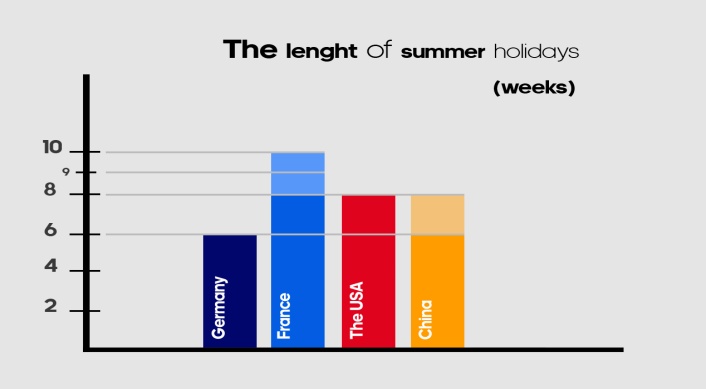
How long are their summer holidays? | Summer holidays are about 6 weeks. | Students have a two-month summer holiday. | Summer holidays last about 6-8 weeks. On their holidays students go to extra classes and schools to try and do the best they can possibly do. | Summer holidays last nearly 10 weeks ( start at the end of May or at the beginning of June) |
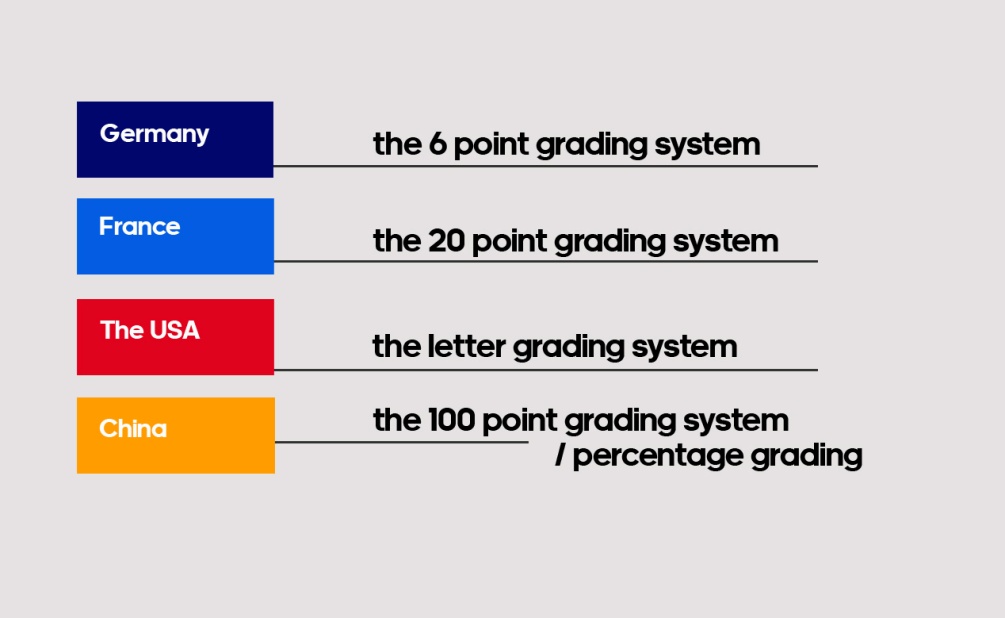
What is the system of grades or marks? | The 6-piont grading system: 1 is excellent 2 is good | The 20-piont grading system: 18-20: honorable 16-17: very good 14-15: good 8-9: sufficient 0-7: fail | China a 100-point grading scale, that is the 100 percentage based marks: 85-100%:excellent 75-84%: good 64-74%: satisfactory 60-63%:pass 0-59%:fail | They have grades from A to F : Ais excellent B is good C is satisfactory D is bad F is fail |
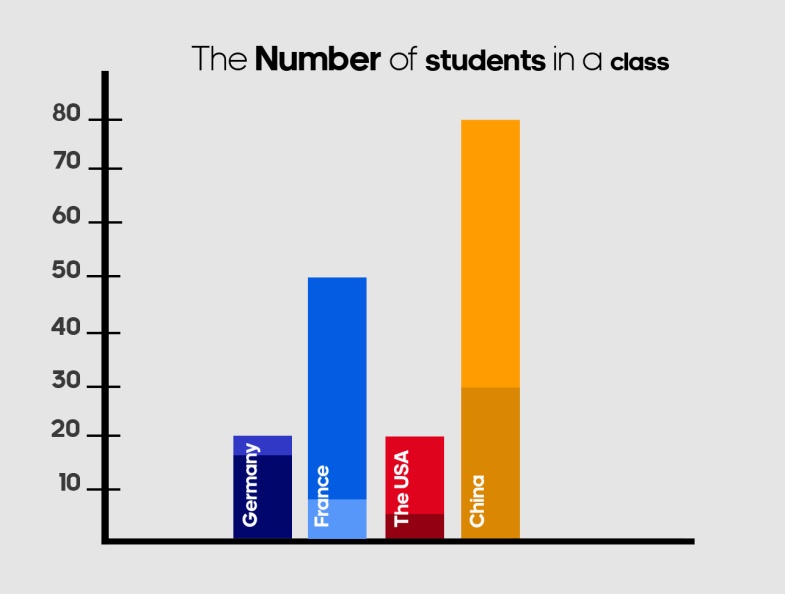
The number of students | There are about 17- 20 students in one class | There are 8-30 students in one class. | There are 30-80 students in one class. | There are 5-20 pupils in a class. It depends on a type of school. |
School subjects | The primary school curriculum includes literacy, mathematics, science, a foreign language, religion, and computer skills. | The primary school curriculum includes literacy and numeracy, French, arithmetic, geography, history, art, and a foreign language, usually English. | At primary schools of China pupils study Maths, Chinese, Natural Science, Drawing and Music. They also get basic knowledge of History, Geography and political system of the country. They study English from the 3rd form. | They have compulsory subjects (English, Reading, Writing, and Drawing). The teachers try to develop their creativity and mental abilities. |
After-school activity | At private schools there are optional courses on Music, Drawing, Computer skills and Sport. State schools offer little extracurricular activities | There is a lack of extra-curricular activities such as sport, music, drama, and arts and crafts. | Many students stay at school longer to do extra-curricular activities (Musical schools, Art schools, Sport Clubs). | Children attend sport/ theatre clubs, music and singing clubs. They choose clubs according to their interests. |
Duration of the lesson | Each class runs for about 45 to 50 minutes. | Each class runs for about 45 to 55 minutes. | A school lesson lasts 40 minutes. | Each lesson lasts 45-50 minutes. |
Duration of the school day | The school day runs from 8:00 a.m. to 2 p.m. | The school day runs from 8:30 a.m. to 5 p.m. | The school day runs from 8:00 a.m. to 4 p.m. | Students study from 8 a.m to 3 p.m. |
Cost of education | Education is mostly free. | Education, both is free of charge and fee-paying.State education is free. | Parents don't pay for primary education at public schools. Private schools are expensive. | State schools are free of charge; private schools are very expensive. |
School week | Students study5 days a week. | Students study 4-4.5 days a week. | Students study5 days a week. | Students study 5 days a week. |
Homework | Homework is considered to be very important. | Officially, it’s forbidden, but most schools set homework for the students. | Students have a lot of homework. | There is no homework at primary schools ( as a rule) |
Exams/ tests | There are no exams. At the end of primary school teachers make a recommendation. Children are divided into classes according to their results and marks. | There are no formal exams at the end of primary school, but there are a lot of tests. | Students take entrance exams to secondary school. | Students have Secondary School Admission Test (SSAT). |
Peculiarities of primary education. | 1. It’s important to mark that in Germany the school year starts in different regions at different times in order to avoid chaos on the roads. 2. Children get their marks only from the 3rd form and have a six-point grading system. The highest mark is 1. 3.The summer holidays last only six weeks, less than in other countries. 4. At the end of primary school children don’t take exams, but get reference letters (recommendations) from their teachers. 5. In Germany children learn best not through formal instructions but through playing. | 1. There is a certain dress code instead of a school uniform. 2. Children study only four days a week. Wednesday is a day off. 3. The school day runs from 8:30 a.m. to 5 p.m. 4. Another interesting feature is a twenty-point grading system, where 20 is the highest mark. 6. Children spend less time on creative activities such as arts and crafts. | 1. The school year runs from the beginning of September to the end of July. 2. Chinese students spend a lot of time at school, from 8:00 a.m. to 4 p.m. 3. Students have to cope with the heavy workload. ( hard work at school and much homework). 3. Chinese schools are known for strict discipline and many of themtake corporalpunishments. 4. Students often practise on farms, in classrooms and workshops. 5. Children get basic knowledge of political system at the beginning of studying. 6. China has a different form of assessment, a 100-point grading scale. 7. All students must wear a general school uniform with an emblem of the school. 8. Students take entrance exams to secondary school. 9. To be well-educated one should know more than 500 symbols (characters). 10.On their holidays students go to extra classes and schools to do the best they can possibly do. | 1. It’s not common for students in the USA to wear school uniforms. 2. Grading starts in year 2. 3. The letter grading system, from A to F, where A is the highest mark. 4. Classes are often divided into A, B and C groups according to speed of learning. The goal is to achieve universal literacy. 5. There is no strict discipline in the class for the first 2 years. During the lessons children are allowed to sit on the floor. 6. The teachers try to develop students’ creativity and mental abilities. |
The survey.
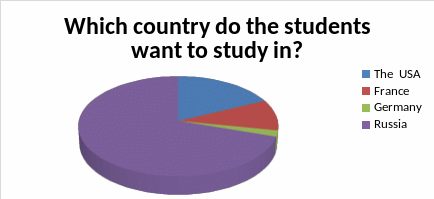
We have conducted a survey of the students of the 8th forms. Our survey showed that 80% of students would like to learn about this theme.
30% of the students would like to study abroad because it gives a splendid opportunity to learn more new knowledge and the new way of thinking.
We asked students about country they would like to choose for study.
18% of students would like to study in the USA because there is no school uniform and strict discipline in the class for the first two years.
10% of students would like to study in France because they study only four days a week. There is a certain dress code.
2% of students would like to study in Germany because students get their marks only from the 3rd form and have a six-point grading system where the highest mark is 1. At the end of primary there are no tests or exams.
No one would like to study in China because Chinese students spend a lot of time at school. Students have to cope with the heavy workload. They must wear a school uniform. What is more, Chinese schoolstake corporal punishments.
The rest of the students (70%) would rather study in Russia. As the old saying goes “East or West home is best”.
It was interesting to find out that the majority would like to study in Russia.
Conclusion.
We’ve studied and compared the systems of primary education in Germany, France, China and the USA.
And we’d like to recap the most interesting peculiarities of primary education in these countries. It should be said that the school year starts at different time of the year. Not in all countries children wear school uniforms and sit exams at the end of primary school. The length of a school day is different too. The longest school day is in France and China. What is more, Chinese schools are known for strict discipline. (Chinese children do not play enough, they study a lot). And we’d like to draw your attention to different grading systems. There are several types of them, for example, letter grading, point grading and percentage grading.
After all is said and done we can conclude that there are a lot of differences at primary level. But one should note that the future of a child is totally depending on the primary education because it offers children the skills they need for the success in life.
The charts.
References.
https://www.expatica.com/de/education/children-education/education-in-germany-101611/
https://germanculture.com.ua/germany-facts/elementary-education-germany/
https://skyteach.ru/wp-content/uploads/2017/09/Back_to_school_around_the_world_worksheet.pdf
https://www.expatrio.com/studying-germany/german-education-system
https://www.studying-in-germany.org/german-education-system/
https://www.iamexpat.de/education/primary-secondary-education
https://www.german-way.com/history-and-culture/education/the-german-school-system/
https://www.justlanded.com/english/United-States/USA-Guide/Education/Elementary-and-Secondary-Education
https://www.studycountry.com/guide/US-education.htm
https://www.mooxye.com/blog/en/american-grading-system-and-gpa/
https://www.justlanded.com/english/France/France-Guide/Education/The-French-school-system
https://russiancouncil.ru/en/schoolsystems#France
https://wise.com/us/blog/french-education-overview
https://www.infoplease.com/world/social-statistics/school-years-around-world
https://www.theschoolrun.com/primary-school-in-france
https://www.justlanded.com/english/France/France-Guide/Education/The-French-school-system
https://www.french-property.com/guides/france/public-services/school-education/primary/curriculum
https://wise.com/us/blog/french-education-overview
https://www.scholaro.com/pro/Countries/china/Education-system
https://www.chinaeducationaltours.com/guide/article-primary-schools-in-china.htm
https://files.eric.ed.gov/fulltext/ED491460.pdf
https://www.studyusa.ru/ru/nachalnoe-obrazovanie-v-ssha
https://www.globaldialog.ru/countries/usa/secondary_education/shkolnoe-obrazovanie-v-ssha/
https://vseobr.com/detskoe-obrazovanie/shkolnoe-obrazovanie-v-usa/
20











Чтобы оставлять комментарии, вам необходимо авторизоваться на сайте. Если у вас еще нет учетной записи на нашем сайте, предлагаем зарегистрироваться. Это займет не более 5 минут.