

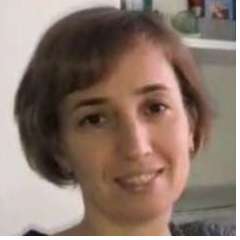
There is a good proverb: "Like teacher, like pupil".
To my mind it's great to be a teacher; however, nowadays this profession isn't so prestigious as it was earlier. I love children and I think it's so good to help them to learn what they didn't know before. And besides, bringing up good children is a very important task. Teaching itself is a creative process; you and your pupils need to be stimulated and motivated. We should say that it is impossible to teach the pupil if he or she does not want to learn. Every teacher ought to do something interesting.
First of all, I think the teacher should work at himself – at the scope of knowledge, speech and personality. To be a good teacher means to be a highly educated person and to know a lot.
As we know, English is becoming a universal language on our planet. It is the language of science, business, the Internet, the Olympic Games, telexes, computers and travelling. One person out of six in the world knows English nowadays. It makes peoples' lives more fruitful, interesting and enjoyable. It's necessary to say that English is useful on business or on holiday.
A teacher of English is in a very interesting and difficult profession. It is interesting because you work with pupils, with personalities. It is difficult because you have to teach them a foreign language. The lesson of a foreign language differs much from the others.
In the organization and conduct of a foreign language lesson there is a wide range of possibilities. No two teachers will treat the same topic in the same way. There are, however, certain basic principles of teaching and learning which should be observed. Firstly, every lesson should begin with a greeting in a foreign language and a brief talk between the teacher and the pupils. Through this conversation the lesson may be motivated. The foreign language should be used for all common classroom activities; the teacher manages the classroom activities by giving directions in the foreign language. He stimulates pupils' participation by asking questions, praises and encourages pupils from time to time, and he may also criticize the behavior of a pupil or a class. Secondly, there should be a variety of activities at every lesson, including pronunciation drill, oral activities, reading and writing. The success of activity is measured by attention, enthusiasm and involvement on the part of the pupils. The lesson should be conducted at a high speed when oral drill exercises are performed. Besides, the lesson should provide a certain sequence in pupils' assimilating language material and developing habits and skills from perception, comprehension and memorizing through the usage in a similar situation following a model, to the usage of the material received in new situations that require thinking on the part of a learner. The lesson should provide time for the activity of every pupil in the class. They must be active participants of the procedure and not the teacher as is often in the case when the teacher talks more than all the pupils. Moreover, the lesson should be well equipped with teaching aids and teaching materials which allow the teacher to create natural situations for developing pupils' hearing and speaking skills in a foreign language. Finally, the teacher should bear in mind that pupils lose all interest in a language that is presented to them by means of endless repetitions, pattern practices, substitutions and so on, and which they cannot use in its main function of exchange of information through hearing or reading. That is why, whenever possible, the teacher should make his pupils aware of the immediate values of his lessons if he hopes to keep and stimulate their interest in language learning which is very important in itself. When a pupil is convinced that learning is vital, he is usually willing to work hard to acquire good knowledge of the language.
As for me, I want to tell you that while preparing for the lesson I am thinking of how to make my pupils interested in it. Sometimes I use projects activity and so-called "role games" at the lessons of senior pupils.
To sum it up, I'd like to mention that much in the process of teaching and learning depends on the personality the teacher. We should be patient, friendly, creative, interesting, professional and modern.









Чтобы оставлять комментарии, вам необходимо авторизоваться на сайте. Если у вас еще нет учетной записи на нашем сайте, предлагаем зарегистрироваться. Это займет не более 5 минут.