

- «Реализация проекта «Добрые игры» в системе дошкольного образования»
- Курс-практикум «Педагогический драйв: от выгорания к горению»
- «Оказание первой помощи в образовательных учреждениях»
- «Труд (технология): специфика предмета в условиях реализации ФГОС НОО»
- «ФАООП УО, ФАОП НОО и ФАОП ООО для обучающихся с ОВЗ: специфика организации образовательного процесса по ФГОС»
- «Специфика работы с детьми-мигрантами дошкольного возраста»


Свидетельство о регистрации
СМИ: ЭЛ № ФС 77-58841
от 28.07.2014

- Бесплатное свидетельство – подтверждайте авторство без лишних затрат.
- Доверие профессионалов – нас выбирают тысячи педагогов и экспертов.
- Подходит для аттестации – дополнительные баллы и документальное подтверждение вашей работы.
в СМИ

профессиональную
деятельность

Foreign Philology: знакомство со специальностью на английском для дошкольников

 514
0
514
0
Foreign Philology
Philology is the study of language through the use of classic or historical texts. This field of study is named for the ancient Greek terms representing love and words, so that philology can be translated as a love of learning, or love of words. People who study philology are primarily concerned with historical language, rather than modern language development. Rather than focus on oral tradition, philology professionals concentrate on ancient written documents and texts, including both famous and everyday writings.
This field shares many features with linguistics, leading many people to confuse these two distinct methods of studying language. Linguistics tends to be highly scientific, and includes a great deal of technical analysis. It is also based primarily around language structure, and relies on both written and oral sources. Philology tends to be less scientific, and instead relies on a combination of psychology, anthropology, and history to analyze words and languages.
One major focus of philology is the historical development, or origins of a language. Academics within this field work to trace the roots of a language, and to determine how it spread to different regions or countries. They also attempt to analyze how language within a specific historical period relates to events taking place at that time. Finally, they try to see what kind of information or clues that language can provide about the people who spoke it, or about the period or place where it was spoken.
Philology can be broken down into several sub-fields based on the goals and interests of different researchers. Comparative philology is concerned with how languages relate to one another, as well as similarities and differences between them. Those interested in the textual analysis of words use philological principles to analyze literature and to combine multiple versions of a manuscript. This type of study is particularly prevalent in studying the Bible.
Cognitive philology focuses on how historical texts can help define the psychological and intelligence aspects of mankind, or of an individual. In this way, this field includes attributes of psychology and philosophy. Finally, philological researchers may specialize in decipherment, which includes deciphering old texts or even cracking the code of a dead language.
Philologists typically choose to focus on a certain group of languages with similar origins. This is often necessary due to the vast differences in structure, history, and development between eastern and western dialects, for example. Many publications and study programs within this field are geared towards classical romance languages, like Greek and Latin, or towards eastern languages such as Chinese, Sanskrit, or Arabic.
Turkish is the official language of the Turkish Republic, and spoken with its more than 80 million people in the country and additionally about 5.5 million people who live in European countries, USA, Australia, Russia and the Arab countries as well (Turkish Foreign Affairs data of 2015). Turkic world outstretches on a wide region like from Balkans to Mongolia. Thereby according to data of UNESCO, Turkish is among the most commonly spoken language all around the world. In this wide region Russia has always been an important country for the Turks and Turkic world since they have a long common history that was experienced in the same territory. Turkish language as evidence of this situation, is the second widespread spoken language after the Slavic languages in the country. Tradition of learning, teaching and practical use of the Turkish language and culture in Russia dates back to time of the establishment of Russian - Ottoman relations. Throughout the time, Soviet Turkology centers became the most famous Turkology centers all around the world depending on their quantitative and qualified studies on the field. In the CIS period the situation was in the progress and since the middle of the 19th century Saint Petersburg increasingly gained its importance in the oriental studies (Buran, 2009, 432 cited in Esen, 2011). The first basic step that led to Turkish studies in Russia was taken in the period of Tsar Peter I. After his establishing the Academy of Sciences in 1724- 1725, the oriental studies in general and studies of Turkology in particular scaled up. His contemporary reforms provided to explore the neighboring Turkic languages and cultures and a mutual learning of the languages Russian and Turkish. Foundation of the departments of oriental languages at the universities of Saint Petersburg, Moscow, Kazan followed by the Turkology studies began in these centers. Since his period, the Turkic languages, dialects and cultures like Tatar, Azerbaijan or Turkmenistan, have been studied by the many scholars of the field.
Адрес публикации: https://www.prodlenka.org/metodicheskie-razrabotki/327075-foreign-philology


БЕСПЛАТНО!
Для скачивания материалов с сайта необходимо авторизоваться на сайте (войти под своим логином и паролем)
Если Вы не регистрировались ранее, Вы можете зарегистрироваться.
После авторизации/регистрации на сайте Вы сможете скачивать необходимый в работе материал.
- «Реализация инвариантного модуля «Компьютерная графика. Черчение» учебного предмета «Труд (технология)» по ФГОС»
- «Развитие профессиональной компетентности учителя начальных классов в контексте ФГОС НОО и профессионального стандарта»
- «Специфика организации работы ДОУ в период эпидемии коронавирусной инфекции»
- «Особенности патриотического воспитания дошкольников в условиях реализации ФГОС ДО»
- «Профессиональная деятельность специалиста по реабилитационной работе в социальной сфере»
- «Патриотическое воспитание в образовательной организации: специфика реализации в соответствии с ФГОС»
- Преподавание в организации среднего профессионального образования
- Организационно-педагогическое обеспечение воспитательного процесса в образовательной организации
- Учитель изобразительного искусства. Педагогическая деятельность по проектированию и реализации образовательного процесса
- Педагогика дополнительного образования детей
- Педагогическое образование: тьюторское сопровождение обучающихся
- Социальное сопровождение и социальная поддержка семей с детьми


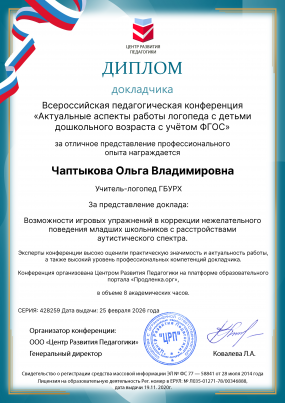


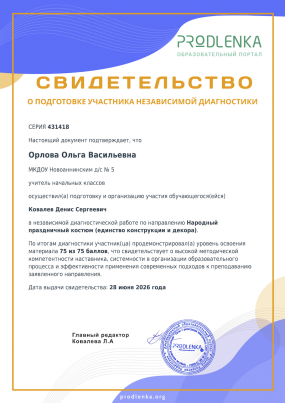


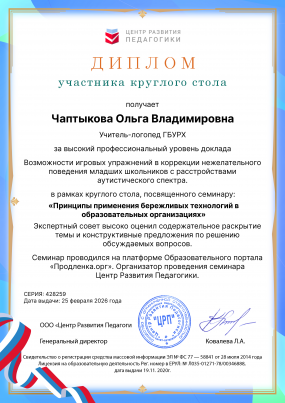


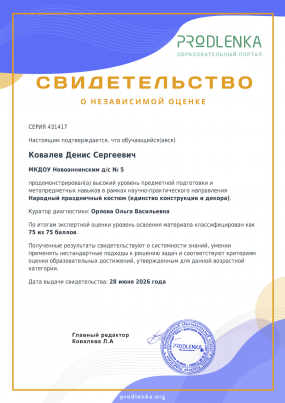


Чтобы оставлять комментарии, вам необходимо авторизоваться на сайте. Если у вас еще нет учетной записи на нашем сайте, предлагаем зарегистрироваться. Это займет не более 5 минут.