

- «Реализация проекта «Добрые игры» в системе дошкольного образования»
- Курс-практикум «Педагогический драйв: от выгорания к горению»
- «Оказание первой помощи в образовательных учреждениях»
- «Труд (технология): специфика предмета в условиях реализации ФГОС НОО»
- «ФАООП УО, ФАОП НОО и ФАОП ООО для обучающихся с ОВЗ: специфика организации образовательного процесса по ФГОС»
- «Специфика работы с детьми-мигрантами дошкольного возраста»


Свидетельство о регистрации
СМИ: ЭЛ № ФС 77-58841
от 28.07.2014

- Бесплатное свидетельство – подтверждайте авторство без лишних затрат.
- Доверие профессионалов – нас выбирают тысячи педагогов и экспертов.
- Подходит для аттестации – дополнительные баллы и документальное подтверждение вашей работы.
в СМИ

профессиональную
деятельность

Key Advantages and Disadvantages of Being Bilingual

 913
0
913
0
Key Advantages and Disadvantages of Being Bilingual
O ur native language shapes the ways in which we see the world, demarcating the boundary between what we can name, and what is beyond our experience. Logically, the more words we know, the more things we know about the world. Now think about a child that grows up speaking two or more different languages – the world of meanings available to this child will be much wider than one experienced by other children.
The research area of linguistics and psychology has yet to recognize the full impact of bilingualism on the lives of such speakers, but what we know so far seems to suggest that speaking more than one language can bring substantial cognitive benefits. Here's an overview of bilingualism, its main benefits, as well as its main cognitive costs.
What does 'bilingualism' actually mean?
Bilingualism is a term that has many definitions, which fluctuate also in research – depending on the study, different groups of individuals might be considered bilingual. Bilingualism is closely related to the phenomenon of language acquisition – the particular way in which we all learn our native language as children. This means that we can call bilingual a child who grew up speaking two different languages, but also one that at the age of 11 moved to a different location and was required to learn the local language. Children usually do it by simply communicating with others – their ability to quickly pick up new words and phrases is simply amazing!
We acquire the skill, and even if we have to work on our writing, speaking seems as natural as breathing. Scientists claim that language acquisition is a process that starts at the beginning of our lives and ends around puberty.
In the most common sense, bilingualism refers to a situation when a child grows up and is confronted with two distinct languages.
Benefits of being bilingual
Research has shown that the brains of children who grew up speaking two different languages develop better cognitive functions. Scientists who examined the phenomenon gave it a specific name – the bilingual advantage. Here's a selection of some of the most important benefits brought by bilingualism.
Improved cognitive skills
The brain of a bilingual speaker quickly gets used to managing two languages at the same time. This helps to develop skills for functions ranging from inhibition (a cognitive mechanism responsible for discarding irrelevant stimuli), working memory and switching attention.
Since bilingual people constantly switch between their two languages, they're likely to be also better at switching between different tasks. This happens even if the tasks in question aren't of linguistic nature.
All these cognitive skills have an impact on the brain's executive control system, which generally takes care of activities like high-level thought, multitasking, and sustained attention. Moreover, bilinguals would also outperform people who speak just one language in spatial working memory tasks.
Bilingual speakers were also shown to have more efficient monitoring systems – this study demonstrated that monolinguals and bilinguals have a similar brain response when the brain's monitoring system is not taxed, but when the situation requires high monitoring demands, bilinguals are faster.
Delay of cognitive damage
There's nothing better for maintaining high cognitive function that participating in stimulating physical or mental activity – it can also delay the onset of symptoms in people suffering from dementia and other cognitive degenerative diseases.
The onset of dementia symptoms are in bilinguals delayed significantly – by a smashing 5 years. The brains of bilinguals who suffer from
Alzheimer’s disease have an improved cognitive function as compared to monolingual Alzheimer's patients – it's as if their brain underwent less brain degeneration.
Learning foreign languages
Once a child learns more than one language, it's fairly common for him or her to pick up another one with ease. Some scientists claim that bilinguals have a better chance to easily learn other languages in future, but this insight still needs research and testing.
It's fair to say that the improved linguistic skills are present already in bilingual speakers. Some of these advantages might include:
Ability to learn new words easily
Spotting rhymes and other associations between words
Ability to use possessed information in new ways
Word categorization
Coming up with solutions to problems
Good listening skills
Improved communication skills
Are there any disadvantages to bilingualism?
Once upon a time bilingualism was considered harmful to one's verbal development and IQ. But that was at the beginning of the century – since then, we've conducted numerous research studies that point to other problems involved in bilingualism.
Another study showed how bilinguals know fewer words of any semantic category in comparison to people that speak fluently only one language – their vocabularies seemed to be somewhat smaller than those of monolingual speakers.
This study pointed out that since in the brain of a bilingual person there are two languages that are constantly active and involve an additional processing cost, it might lead to verbal skills of a bilingual person to be generally weaker that those noted in monolingual speakers of the language.
Even if there are costs to be paid for being fluent in two languages, the many advantages of bilingualism are really worth the trouble. If you're worried that your children might encounter communication problem if you choose to speak a different language at home or move to a different location, don't worry – their brains are under development and will quickly adjust to the new linguistic environment.
That's not the end of it – this study found out that bilinguals suffer more from 'tip of the tongue' moments than monolingual speakers. Moreover, the costs in vocabulary were found out to be just as applicable to syntax.
Being bilingual, they will also find it easier to pick up new languages once they're adult – all in all, bilingualism is something that will help them to lead richer lives and develop understanding towards different cultures.
Адрес публикации: https://www.prodlenka.org/metodicheskie-razrabotki/324899-key-advantages-and-disadvantages-of-being-bil


БЕСПЛАТНО!
Для скачивания материалов с сайта необходимо авторизоваться на сайте (войти под своим логином и паролем)
Если Вы не регистрировались ранее, Вы можете зарегистрироваться.
После авторизации/регистрации на сайте Вы сможете скачивать необходимый в работе материал.
- «Содержание и методы преподавания учебного предмета «Литературное чтение» по ФГОС НОО»
- «Заместитель директора по УВР: организация и содержание профессиональной деятельности»
- «Педагогические технологии в организации образовательного процесса по ФГОС»
- «Направления и формы организации взаимодействия с родителями в работе педагогов ДОУ»
- «Подготовка к ЕГЭ по географии в условиях реализации ФГОС: содержание экзамена и технологии работы с обучающимися»
- «Профессиональная деятельность воспитателя ДОУ в условиях реализации ФГОС»
- Менеджер в образовании: управленческая деятельность в образовательной организации
- Профессиональная деятельность музыкального руководителя дошкольной образовательной организации
- Деятельность тьютора по сопровождению детей с ограниченными возможностями здоровья
- Психологическое консультирование: оказание психологической помощи населению и трудовым коллективам
- Музыка: теория и методика преподавания в образовательных организациях
- Педагог-библиотекарь: библиотечное дело в образовательной организации

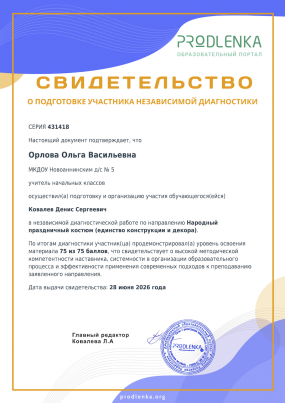


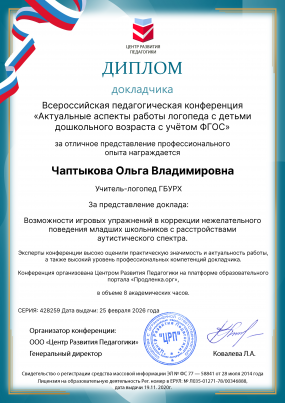





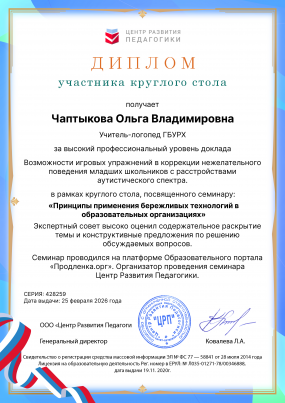


Чтобы оставлять комментарии, вам необходимо авторизоваться на сайте. Если у вас еще нет учетной записи на нашем сайте, предлагаем зарегистрироваться. Это займет не более 5 минут.