

- «Реализация проекта «Добрые игры» в системе дошкольного образования»
- Курс-практикум «Педагогический драйв: от выгорания к горению»
- «Оказание первой помощи в образовательных учреждениях»
- «Труд (технология): специфика предмета в условиях реализации ФГОС НОО»
- «ФАООП УО, ФАОП НОО и ФАОП ООО для обучающихся с ОВЗ: специфика организации образовательного процесса по ФГОС»
- «Специфика работы с детьми-мигрантами дошкольного возраста»


Свидетельство о регистрации
СМИ: ЭЛ № ФС 77-58841
от 28.07.2014

- Бесплатное свидетельство – подтверждайте авторство без лишних затрат.
- Доверие профессионалов – нас выбирают тысячи педагогов и экспертов.
- Подходит для аттестации – дополнительные баллы и документальное подтверждение вашей работы.
в СМИ

профессиональную
деятельность

Филология для педагогов ДО: язык, история и литература в играх

 471
0
471
0
PHILOLOGY
Philology is the study of language in oral and written historical sources; it is the intersection between literary criticism, history, and linguistics. Philology is more commonly defined as the study of literary texts as well as oral and written records, the establishment of their authenticity and their original form, and the determination of their meaning. A person who pursues this kind of study is known as a philologist.
In older usage, especially British, philology is more general, covering comparative and historical linguistics.
Classical philology studies classical languages. Classical philology principally originated from the Library of Pergamum and the Library of Alexandria around the fourth century BCE, continued by Greeks and Romans throughout the Roman/Byzantine Empire. It was preserved and promoted during the Islamic Golden Age, and eventually resumed by European scholars of the Renaissance, where it was soon joined by philologies of other non-Asian (European) (Germanic, Celtic), Eurasian (Slavistics, etc.) and Asian (Arabic, Persian, Sanskrit, Chinese, etc.) languages. Indo-European studies involves the comparative philology of all Indo-European languages.
Philology, with its focus on historical development (diachronic analysis), is contrasted with linguistics due to Ferdinand de Saussure's insistence on the importance of synchronic analysis. The contrast continued with the emergence of structuralism and Chomskyan linguistics alongside its emphasis on syntax.
The term "philology" is derived from the Greek φιλολογία (philología), from the terms φίλος (phílos) "love, affection, loved, beloved, dear, friend" and λόγος (lógos) "word, articulation, reason", describing a love of learning, of literature, as well as of argument and reasoning, reflecting the range of activities included under the notion of λόγος. The term changed little with the Latin philologia, and later entered the English language in the 16th century, from the Middle French philologie, in the sense of "love of literature".
The adjective φιλόλογος (philólogos) meant "fond of discussion or argument, talkative", in Hellenistic Greek, also implying an excessive ("sophistic") preference of argument over the love of true wisdom, φιλόσοφος (philósophos).
As an allegory of literary erudition, philologia appears in fifth-century postclassical literature (Martianus Capella, De nuptiis Philologiae et Mercurii), an idea revived in Late Medieval literature (Chaucer, Lydgate).
The meaning of "love of learning and literature" was narrowed to "the study of the historical development of languages" (historical linguistics) in 19th-century usage of the term. Due to the rapid progress made in understanding sound laws and language change, the "golden age of philology" lasted throughout the 19th century, or "from Giacomo Leopardi and Friedrich Schlegel to Nietzsche". In the Anglo-Saxon world, the term philology to describe work on languages and literatures, which had become synonymous with the practices of German scholars, was abandoned as a consequence of anti-German feeling following World War I.
Most continental European countries still maintain the term to designate departments, colleges, position titles, and journals. J. R. R. Tolkien opposed the nationalist reaction against philological practices, claiming that "the philological instinct" was "universal as is the use of language". In British English usage, and in British academia, "philology" remains largely synonymous with "historical linguistics", while in US English, and US academia, the wider meaning of "study of a language's grammar, history and literary tradition" remains more widespread. Based on the harsh critique of Friedrich Nietzsche, US scholars since the 1980s have viewed philology as responsible for a narrowly scientistic study of language and literature.
Philology also includes the study of texts and their history. It includes elements of textual criticism, trying to reconstruct an author's original text based on variant copies of manuscripts. This branch of research arose among Ancient scholars in the 4th century BC Greek-speaking world, who desired to establish a standard text of popular authors for the purposes of both sound interpretation and secure transmission. Since that time, the original principles of textual criticism have been improved and applied to other widely distributed texts such as the Bible. Scholars have tried to reconstruct the original readings of the Bible from the manuscript variants. This method was applied to Classical Studies and to medieval texts as a way to reconstruct the author's original work. The method produced so-called "critical editions", which provided a reconstructed text accompanied by a "criticalapparatus", i.e., footnotes that listed the various manuscript variants available, enabling scholars to gain insight into the entire manuscript tradition and argue about the variants.
Адрес публикации: https://www.prodlenka.org/metodicheskie-razrabotki/325533-philology


БЕСПЛАТНО!
Для скачивания материалов с сайта необходимо авторизоваться на сайте (войти под своим логином и паролем)
Если Вы не регистрировались ранее, Вы можете зарегистрироваться.
После авторизации/регистрации на сайте Вы сможете скачивать необходимый в работе материал.
- «Доступная среда в образовательной организации в условиях реализации ФГОС»
- «Профессиональная деятельность специалиста органов опеки и попечительства»
- «Внеурочная деятельность: методы и технологии организации учебно-воспитательной работы по ФГОС»
- «Организация обучения русскому родному языку и литературному чтению на родном языке в соответствии с ФГОС НОО»
- «Подготовка к ЕГЭ по физике в условиях реализации ФГОС: содержание экзамена и технологии работы с обучающимися»
- «Творческая деятельность обучающихся»
- Методист дошкольной образовательной организации. Педагогика и методика дошкольного образования
- Урегулирование споров с помощью процедуры медиации
- Содержание деятельности по охране труда и обеспечению безопасности условий на рабочих местах
- Психологическое консультирование: оказание психологической помощи населению и трудовым коллективам
- Практическая психология. Методы и технологии оказания психологической помощи населению
- Профессиональная деятельность специалиста в области охраны труда: теоретические и практические аспекты

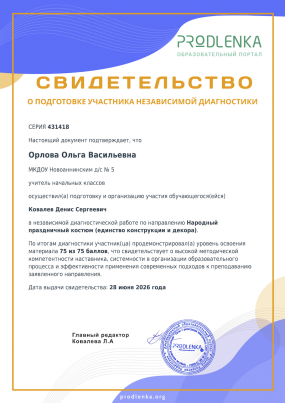



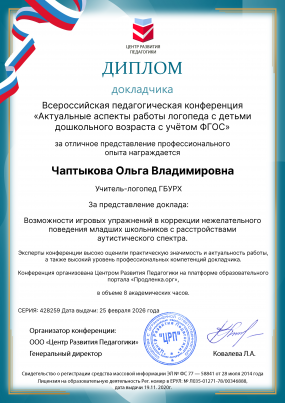
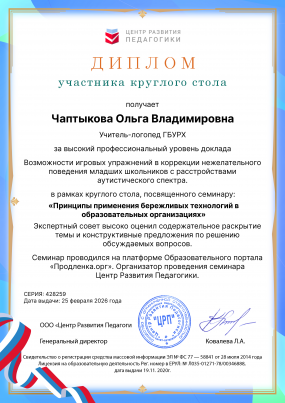


Чтобы оставлять комментарии, вам необходимо авторизоваться на сайте. Если у вас еще нет учетной записи на нашем сайте, предлагаем зарегистрироваться. Это займет не более 5 минут.