

- «Реализация проекта «Добрые игры» в системе дошкольного образования»
- Курс-практикум «Педагогический драйв: от выгорания к горению»
- «Оказание первой помощи в образовательных учреждениях»
- «Труд (технология): специфика предмета в условиях реализации ФГОС НОО»
- «ФАООП УО, ФАОП НОО и ФАОП ООО для обучающихся с ОВЗ: специфика организации образовательного процесса по ФГОС»
- «Специфика работы с детьми-мигрантами дошкольного возраста»


Свидетельство о регистрации
СМИ: ЭЛ № ФС 77-58841
от 28.07.2014

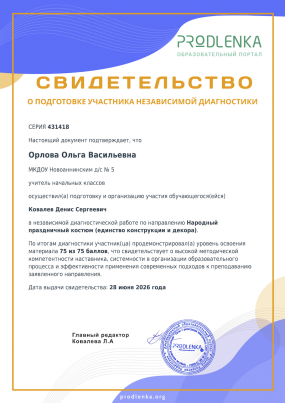
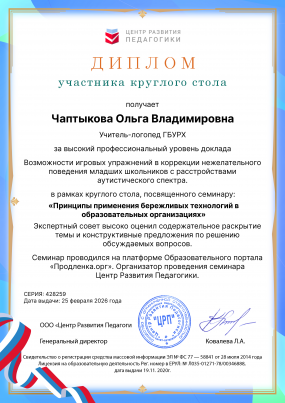
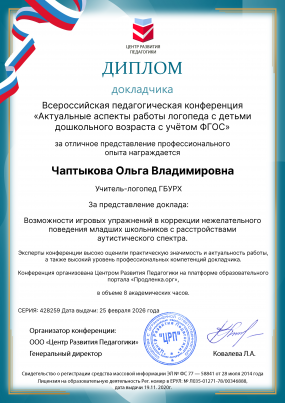
- Бесплатное свидетельство – подтверждайте авторство без лишних затрат.
- Доверие профессионалов – нас выбирают тысячи педагогов и экспертов.
- Подходит для аттестации – дополнительные баллы и документальное подтверждение вашей работы.
в СМИ

профессиональную
деятельность

Введение в филологию для дошкольников: изучаем язык и тексты

 773
0
773
0
Philology union of disciplines within the humanities linguistics, literary theory and criticism, history, and others which studies thehistory and essence of human spiritual culture through linguistic and stylistic analysis of written texts. In philology, the text, inall its internal aspects and external relations, is the fundamental reality. Philology focuses its attention on the text in order tocompile a working commentary the most ancient form of and classical prototype for all philological work. In doing so, ittakes into account the breadth and depth of human existence, primarily, of human spiritual existence. Thus, the internalstructure of philology represents a dichotomy: at one extreme is a close reading that does not depart from the concrete text;at the other is a universality, whose bounds are impossible to determine beforehand. Ideally, the philologist must knoweverything, in the most literal sense of the word, since in principle everything may be necessary to explicate a given text.
Inasmuch as it is a function of the selfknowledge of culture, philology arises at a relatively mature stage in literatecivilizations; its existence is indicative of both the level and the type of civilization. Philology was unknown in the highlydeveloped ancient cultures of the Near East, and it was allotted very modest interest in Western Europe in the Middle Ages.In ancient India and Greece, the cradle of philosophy, philology developed as a separate corollary from the gnoseologicalreflection on human thought, which was first formulated there; philology was a reflection on word and speech, a departurefrom the direct treatment of the two. Later, conflicts arose between the philosophical striving toward abstraction andphilology’s concreteness, for example, the attacks of the humanist philologists on medieval Scholasticism and Hegel’spejorative reference to philology. Nevertheless, the original union of philosophy and philology was not accidental, and thehighest developments of philology usually followed the great epochs of gnoseological thought: in the Hellenistic world, afterAristotle; in 17th-century Europe, after R. Descartes; and in 19th-century Germany, after I. Kant).
The essential principles of philology, however, enter into extremely complicated relationships with certain cultural andintellectual trends in modern times. First, the moral foundation of philological research was always a faith in the absolutesignificance inhering in certain texts, in which was sought the source of a higher spiritual orientation; it was felt that one’sentire life could be profitably spent in working on such texts. For the religious faith of the Christian scholars, these were thetexts of the Old and the New Testament; for the secular faith of the Renaissance humanists and the neohumanistcontemporaries of Winckelmann and J. W. von Goethe, they were the texts of classical antiquity. Nevertheless, modern mancan no longer accept any venerable ancient text with the same faith and naivete he once possessed. Scholarly progress hasmade philology itself more democratic and wide-reaching, forcing it to reject the preference once shown to certain privilegedtexts. Now, instead of two varieties of philology—classical philology and the biblical philologia sacra—there exist as manyvarieties of philology as there are linguistic regions of the world. Such a broadening of the concepts of what is interesting,important, and valuable results in a loss of intimacy with respect to the subject. Of course, there are instances in which therelationship to a text retains the former features: the works of Dante for Italians, of Goethe for Germans, and of A.S. Pushkinfor Russians are texts that, in each case, preserve the significance of a universal, living symbol. Nevertheless, philology as asubstantive discipline is undergoing a genuine crisis.
The universality of philology was most clearly embodied between the Renaissance and the mid-19th century in the traditionalfigure of the classicist, a specialist in ancient texts. The classical philologist was a combination of linguist, critic, historian ofcustoms and culture, and expert in the humanities and, on occasion, even the natural sciences—everything that might inprinciple be required to explicate a text. In spite of the subsequent differentiation of linguistics, literary theory and criticism,history, and other disciplines that arose from what was once a single science of history and philology, the essential unity ofphilology as a special approach to the written word was still preserved, although in less distinct form. Philology continued notas a particular science, as distinct in subject matter from history, linguistics, and literary theory and criticism, but as ascholarly principle, an autonomous form of knowledge, distinguished not so much by the limits of its subject as by itsapproach to that subject.
Адрес публикации: https://www.prodlenka.org/metodicheskie-razrabotki/326026-foreign-philology


БЕСПЛАТНО!
Для скачивания материалов с сайта необходимо авторизоваться на сайте (войти под своим логином и паролем)
Если Вы не регистрировались ранее, Вы можете зарегистрироваться.
После авторизации/регистрации на сайте Вы сможете скачивать необходимый в работе материал.
- «Развитие естественно-научной грамотности обучающихся на уроках физики»
- «Педагогическая диагностика и оценка успеваемости обучающихся в контексте реализации ФГОС»
- «Иностранный (английский) язык: обучение в соответствии с Федеральной рабочей программой в условиях реализации ФГОС ООО»
- «Подготовка к ЕГЭ по литературе в условиях реализации ФГОС: содержание экзамена и технологии работы с обучающимися»
- «Преподавание химии и биологии по ФГОС ООО и ФГОС СОО: содержание, методы и технологии»
- «Специфика работы с детьми-мигрантами дошкольного возраста»
- Педагогическое образование: теория и методика преподавания физики
- Учитель-наставник. Организационно-методическое сопровождение профессиональной деятельности педагогов
- Профессиональная деятельность специалиста в области охраны труда: теоретические и практические аспекты
- Организация работы классного руководителя в образовательной организации
- Педагог-воспитатель группы продленного дня. Организация учебно-воспитательной деятельности обучающихся
- Педагогическая деятельность в среднем профессиональном образовании










Чтобы оставлять комментарии, вам необходимо авторизоваться на сайте. Если у вас еще нет учетной записи на нашем сайте, предлагаем зарегистрироваться. Это займет не более 5 минут.