

- «Реализация проекта «Добрые игры» в системе дошкольного образования»
- Курс-практикум «Педагогический драйв: от выгорания к горению»
- «Оказание первой помощи в образовательных учреждениях»
- «Труд (технология): специфика предмета в условиях реализации ФГОС НОО»
- «ФАООП УО, ФАОП НОО и ФАОП ООО для обучающихся с ОВЗ: специфика организации образовательного процесса по ФГОС»
- «Специфика работы с детьми-мигрантами дошкольного возраста»


Свидетельство о регистрации
СМИ: ЭЛ № ФС 77-58841
от 28.07.2014

- Бесплатное свидетельство – подтверждайте авторство без лишних затрат.
- Доверие профессионалов – нас выбирают тысячи педагогов и экспертов.
- Подходит для аттестации – дополнительные баллы и документальное подтверждение вашей работы.
в СМИ

профессиональную
деятельность

Аннотация к презентации по английскому языку «Our favourite devices» к теме «Inventions that shook the world» для учащихся 11-го класса
 1015
0
1015
0
Аннотациякпрезентациипоанглийскомуязыку
«Our favourite devices» ктеме «Inventions that shook the world»
для учащихся 11-го класса
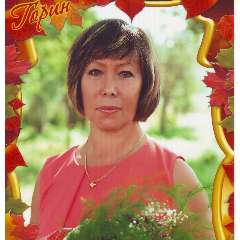
Автор: Полях Елена Александровна
Название ОУ: Муниципальное бюджетное общеобразовательное
учреждение средняя общеобразовательная школа
п. Горин Солнечного муниципального района
Хабаровского края
Название ресурса: Ourfavouritedevices
Цель создания ресурса: Формирование ключевых языковых компетенций
на уроках английского языка
Оборудование: ПК для учителя, мультимедийный проектор
Содержание:
I.Оглавление
What invention do you know?
Practice in reading, in translating.
The questions for the dialogue.
The names of the inventors and their inventions.
Guess the invention.
Modern inventions in our life.
Arguments for and against the computer, the car and the phone.
It’s the thing you need! Or …
The most useful devices.
Grammar for revision.
Mikhail Lomonosov – a great Russian scientist.
Tsiolkovsky – founder of astronautics.
II. Упражнение на чтение и перевод:
1. to defrost a) консервы
2. to do calculations b) цифровой
3. to reduce c) бесценный
4. to avoid contacts d) сокращать
5. to operate a unit e) немноготехнологии
6. the local power system f) делатьвычисления
7. according to the instructions g) избегатьконтактов
8. digital h) сборочная линия
9. cordless i) разморозить
10. invaluable j) без провода
11. assemblyline k) управлять бытовой техникой
12. cannedfood l) местная система напряжения
13. abitoftechnology m) в соответствии с инструкциями
III.Вопросы:
1. What units and machines do you use in your household?
2. What do you use for watching films?
3. What do you use for calling somebody who is far from you?
4. What do you use for cleaning rooms?
5. What gadget do you use for taking photos?
6. What do you use for listening to music?
7. What is the most useless thing in your household?
8. What is the most useful thing for your mother?
9. What thing can’t your father live without?
10. What unit or machine can’t you do without?
11. What thing do you use every day?
12. What thing do you use regularly?
13. What is your favourite unit?
Well, you use many units and machines. And do you know the names of people who invented them?
IV: Упражнение на нахождение имени изобретателя и его изобретения:
1. Henry Ford a) colour television in 1928
2. Alexander Bell b) a helicopter in 1909
3. John Lodgie Baird c) a satellite Sputnik 1
4. Alexander Fleming d) matches in1827
5. Igor Sikorsky invented e) dynamite in 1867
6. Sergei Korolev f) the assembly line in 1903
7. William O. Grover g) penicillin in 1928
8. Alfred Nobel h) the telephone in1876
9. John Walker i) a sewing machine
V. Составление предложений об изобретениях:
What was invented by...?
…was invented by W. Grover in the USA in 1851.
…was made by A. Bell in the USA in 1876.
…was designed by K. Benz and G. Daimler in Germany in 1903.
…was invented in the USA in 1940s.
… was built by James Murray Spangler in 1908.
… was developed by Akito Morita in Japan in 1949.
VI. Составление предложений о цели использования тех или иных устройств:
1. a camera | a) to move fast and quick around the world |
2. a microwave | b) to build up one‘s strength |
3. a mobile telephone | c) to move wherever you want by yourself |
4.a TV set | d) to take photographs |
5.a vacuum cleaner food | e) to cook, defrost, reheat pre-cooked |
6. a fridge | f) to receive or make call around the home |
7. a computer | g) to perform everyday cleaning tasks vacuuming to clearing to clearing up liquids, dust waste and shampooing carpets |
8. a TV remote-control unit | h) to keep food fresh for a long time |
9. a plane | i) to play games, find and use information |
10. a body building machine | j) to operate a TV set from a distance |
11. a fax machine time | l) to send and receive urgent messages |
12. a car | k) to have fun and to entertain |
VII. Составление предложений «За и против компьютера, автомобиля, телефона» при помощи предложенных словосочетаний:
Replace seeing our friends, Pollution, accidents, A convenience, A way of self-expression, More trouble than it’s worth, Need with the help of it, Really invaluable, Get in touch with our friends, A necessity rather than a luxury, Call the police or an ambulance, Save time, Dangerous for health, Too expensive etc.
VIII. Составление предложений о полезных (бесполезных) вещах:
I think that … is the most important thing.
2. We can use it to … .
3. To my mind … saves a lot of time.
4. … offers a lot of possibilities. Using … leaves me more time to enjoy myself.
5. Some of the inventions for example …, is/are less important.
6. We do not often …..
7. And I’m sure we can do without … .
IX. Заполнение пробелов в тексте при помощи слов для справок:
Over the years scientists have invented a great number of things, which we now ..1.. in everyday life, for example, computers, telephones, radio, television, automobiles, photography, electricity, steam engine, planes etc.
One of the most useful devices today is ..2.. . Today, people simply can’t ..3.. their lives without computers. There is ..4.. which has grown up with calculators, computer games, word processor, Internet and else.
Another vital ..5.. is the TV. This ..6.. has truly changed the leisure habits of millions of people worldwide.
..7.. , perhaps, is even more important. We wouldn’t be able to use computers and TVs without it. The invention of electricity is connected with such ..8.. as Michael Faraday, Alessandro Volta and Andre Marie Ampere.
The invention of different types of ..9.. has also changed the world, for example, airplanes and motor cars. Planes have brought distant lands within easy reach of ordinary people. And whether we like them or not, ..10.. have given people great freedom of travel.
X. Повторение грамматического материала:
SimplePastPassive
Present Perfect Passive
Past Perfect Passive
Перевод предложений, составление по образцу.
Emilie Berliner improved and patented a gramophone, which had been invented by T. Edison in 1877 and was known as a phonograph. / First Thomas Edison invented a phonograph in 1877. Later Emilie Berliner improved that machine and patented it as a gramophone./
In August of 1877 T. Edison improved a talking machine, which had been invented by Charles Grow in 1877. He replaced a wax turntable by a tinfoil turntable.
Thomas Edison invented and produced many new items and improvements of the telegraph, which had been invented by Samuel Morse in 1837.
By the time Thomas Edison organized an “invention factory” in 1877 a lot of inventions and improvements had been already made by him and his assistants.
One of Thomas Edison’s first inventions was an improvement on A. Bell’s telephone which had been invented by Alexander Bell in 1876.
Over a year 1600 materials had been tested by Thomas Edison before he developed a light bulb.
XI. Чтение текста о М. Ломоносове; выполнение упражнений:
Mikhail Lomonosov was born in 1711 in the family of a fisherman in the northern village of Denisovka not far from Archangelsk. When he was ten years his father began to take him sea fishing. During the long winter nights young Lomonosov studied his letters, grammar and arithmetic diligently. Being the son of a peasant he was refused admission to the local school. After some years through concealing his peasant origin he gained admission to the Slavonic-Greek-Latin Academy and for five years lived a hand-to-mouth existence on three kopecks a day. The noblemen's sons studying with him made fun of the twenty-year-old giant who, in spite of the jeers and his own poverty, made rapid progress. After five years came the chance of entering the Academy of Science. His ability and diligence attracted the attention of the professors and as one of three best students he was sent abroad.
Mikhail Lomonosov spent all the time there studying the works of leading European scientists in chemistry, metallurgy, mining and mathematics. On his return to Russia in 1745 he was made a professor and was the first Russian scientist to become a member of the Academy of Sciences. For versatility Lomonosov has no equal in Russian science. Many of his ideas and discoveries only won recognition in the nineteenth century. He was the first to discover the vegetable origin of coal and as a poet and scientist he played a great role in the formation of the Russian literary language, eliminating distortions and unnecessary foreign words. He died in 1765. His living memorial is the Moscow University, which he founded in 1755.
-Ответьтенавопросы:
1. What kind of family was Lomonosov born in?
2. What kind of childhood did he have?
3. What kind of existence did he live during his studies?
4. Why was he able to enter the Academy of Science?
5. What part did Lomonosov play in science?
- Переведите на русский язык:
1.В течение 5 лет ему пришлось вести нищенское существование.
2. Несмотря на возраст и бедность, Ломоносов делал быстрые успехи.
3. За старательность и прекрасные способности Ломоносова послали за границу, где он изучал химию, металлургию, горное дело и математику.
4. Ломоносову нет равных по количеству сделанных им открытий.
5. Многие его открытия получили признание только в ХХ веке.
6. Ломоносов сыграл большую роль в формировании русского
литературного языка.
XII. Чтение текста о К. Циолковском; выполнение упражнений:
Konstantin Eduardovich Tsiolkovsky, the founder of astronautics, was born in 1857, in the village of Izhevsk in Ryazan province. When Tsiolkovsky reached the age of fifteen he begun to study elementary mathematics. At about this time he first thought of constructing a large balloon with a metallic envelope. Realizing that his knowledge was not enough he began to study higher mathematics. In 1887 Tsiolkovsky's first published paper on the dirigible appeared.
Tsiolkivskyhad not given up his idea about space travel.
A popular report on this subject was first published in 1895. During the next fifteen years Tsiolkovsky worked over other designs for spaceships. He published several articles and books dealing with the mathematical theory of rocket flights and space travel. His calculations were used in modern theory of cosmonautics and practical space flights. They showed that it would be possible to travel out into space in rockets and even to set up manned space stations around the Earth.
Tsiolkivsky's contribution to science is so great that he is considered to be "Father of Cosmonautics".
-Ответьтенавопросы:
1. What kind of education did Tsiolkovsky get and why?
2. How did he realize that he had to study higher mathematics?
3. What aeronautical problem was he interested in?
4. What was Tsiolkovsky's idea of a spaceship?
5. Why is Tsiolkovsky called "Father of Cosmonautics"?
- Переведите на русский язык:
1. В 15 лет Циолковский стал изучать элементарную математику.
2. Ему пришла идея сооружения большого воздушного шара с металлическим покрытием.
3. В течение 15 лет Циолковский работал над проектами космических кораблей.
4. Циолковский опубликовал ряд работ по математической теории ракетных полетов.
5. Вычисления, сделанные Циолковским, используются в теории космонавтики и практике управляемых космических полетов.
6. Циолковского называют "отцом космонавтики", благодаря вкладу, который он внес в теорию и практику космических полетов.
Методические
рекомендации
по реализации ресурса: Данный материал определен как тренажер,
сформирован по принципу минимакса и рассчитан
нациклуроковпотеме « Inventions that shook the world»
дляучащихся 11-го класса.
Содержание презентации
дает возможность использовать те или иные
упражнения по усмотрению учителя в зависимости
от целей урока, уровня подготовленности учащихся,
применять дифференцированный подход для
организации первичного закрепления материала по
теме, повторения и обобщения, для контроля
усвоения знаний по теме, для организации
групповой, парной, самостоятельной работы по всем
видам речевой деятельности учащихся. Структура
упражнений учитывает возможность использования
данной презентации в программе Notebook.
Список источников:
В.П.Кузовлев, Н.М. Лапа, учебник английского языка для 10-11 кл. М.: Просвещение, 2004 г.
klassnye-chasy.ru
http://www.yandex.ru/
http://prezentacii.com/
Talking Wires: The Development of the Telephonehttp://www.moah.org/exhibits/archives/talkingwires.html
Encyclopedia Britannicahttp://www.britannica.com/EBchecked/topic/585993/telephone
Адрес публикации: https://www.prodlenka.org/metodicheskie-razrabotki/384995-annotacija-k-prezentacii-po-anglijskomu-jazyk


БЕСПЛАТНО!
Для скачивания материалов с сайта необходимо авторизоваться на сайте (войти под своим логином и паролем)
Если Вы не регистрировались ранее, Вы можете зарегистрироваться.
После авторизации/регистрации на сайте Вы сможете скачивать необходимый в работе материал.
- «Особенности проведения «Разговоров о важном» на уровне дошкольного образования»
- «Современные подходы к организации учебно-воспитательного процесса в общеобразовательной школе»
- «Кубановедение: особенности преподавания учебного предмета в соответствии с ФГОС НОО, ФГОС ООО от 2021 года и ФГОС СОО»
- «Теория управления образовательными системами»
- «Специфика организации обучения детей с тяжелыми и множественными нарушениями развития (ТМНР)»
- «Организация подготовки детей к школьному обучению»
- Учитель-наставник. Организационно-методическое сопровождение профессиональной деятельности педагогов
- Социальный координатор: социальная работа по сопровождению ветеранов боевых действий
- Психолог в сфере образования: организация и ведение психолого-педагогической работы в образовательной организации
- Профессиональная деятельность музыкального руководителя дошкольной образовательной организации
- Педагог-библиотекарь: библиотечное дело в образовательной организации
- Деятельность тьютора по сопровождению детей с ограниченными возможностями здоровья






Чтобы оставлять комментарии, вам необходимо авторизоваться на сайте. Если у вас еще нет учетной записи на нашем сайте, предлагаем зарегистрироваться. Это займет не более 5 минут.