

- «Реализация проекта «Добрые игры» в системе дошкольного образования»
- Курс-практикум «Педагогический драйв: от выгорания к горению»
- «Оказание первой помощи в образовательных учреждениях»
- «Труд (технология): специфика предмета в условиях реализации ФГОС НОО»
- «ФАООП УО, ФАОП НОО и ФАОП ООО для обучающихся с ОВЗ: специфика организации образовательного процесса по ФГОС»
- «Специфика работы с детьми-мигрантами дошкольного возраста»


Свидетельство о регистрации
СМИ: ЭЛ № ФС 77-58841
от 28.07.2014

- Бесплатное свидетельство – подтверждайте авторство без лишних затрат.
- Доверие профессионалов – нас выбирают тысячи педагогов и экспертов.
- Подходит для аттестации – дополнительные баллы и документальное подтверждение вашей работы.
в СМИ

профессиональную
деятельность

Why foreign language learning is still important

 683
0
683
0
WHY FOREIGN LANGUAGE LEARNING IS STILL IMPORTANT
Despite all the reasons you’ve very likely heard about the benefits of learning another language – good for your degree, good for your travels, good for your career – some people seem to think that being multilingual isn’t all that important anymore. We’re here to remind you that not only is it important, it may very well be necessary.
It’s true that there are more and more people learning and speaking English these days. In fact, English is, according to some measures, the most widely spoken language in the world, the de facto lingua franca. Approximately 1.5 billion people around the world speak English, whether as their native tongue or as a foreign language, and this number is still growing.
As Chinese universities (for example) offer more instruction to Chinese students in English, study abroad administrators and their students will start to de-emphasize language learning on programs. The same phenomenon is happening in all parts of the world. I think the natural trend will be to overlook the incredible benefits of language learning, and to more quickly embrace programs that require very little in terms of language. This is what we have to work against.
Mark Lenhart, Executive Director of CET Academic Programs
But why limit yourself? What about the other 5.5 billion people who don’t speak any English at all? Even if you don’t plan on ever setting foot outside your own town again, what happens if the world comes to you?
With ever-increasing levels of international trade and business, tourism, immigration, and random cross-cultural experiences, chances are you will eventually find yourself face-to-face with someone who doesn’t speak English, at least not up to a level you understand. The reasons to learn a foreign language or two have never been stronger. You don’t need to be a polyglot, but read on for reasons why language learning is still important.
1. You Have to Learn a Foreign Language for School
Learning a new language can be a part of your preparation for college or graduate school. Being able to speak a foreign language -- especially an in demand language like Chinese, Arabic, or Spanish -- and having experience with a different culture looks good on any application.
Many undergraduate programs and even some postgraduate courses have foreign language courses as part of their major or graduation requirements. At least two top international MBA business schools require all incoming students to know a second language in addition to English.
“One reason some students study language is because they are required to,” says Mark Lenhart, Executive Director of CET Academic Programs, a study abroad organization based in Washington, DC that designs innovative language and culture immersion programs abroad. “We sometimes have students tell us they choose our programs because the language classes fulfill a requirement."
2. It's Necessary for Your Work (or Better Prospects)
Learn a Foreign Language
There aren’t many situations where language skills are the reason that someone gets passed over for a promotion, or even just to keep the job. But in an increasingly competitive job market, why would you not give yourself every possible edge?
But it’s not just about padding your resume. With globalization in full swing, there’s a good chance you’ll be working with people whose first language isn’t English. Maybe it’s a development team in India, or a manufacturing plant in China, or an alternative energy supplier in Germany; being able to communicate in other languages makes you much more valuable to an employer.
David Goodman-Smith, managing partner at China Study Abroad, a full-service agency based in Beijing, says his company’s fastest-growing group of students are people looking to enhance their employment opportunities. “Having that competitive edge on your CV these days can be invaluable and Mandarin is without a doubt an eye-catcher. Companies are on the lookout for these kind of experiences more and more,” he explains.
3. Your Family
It might be strange at first to think that you have to learn a new language for family reasons, but many people hail from immigrant families, and once you get into the second and third generation, it’s very often the case where the local language is your first language rather than your family’s original tongue.
David says China Study Abroad has seen more and more ethnic Chinese people going to China to study Mandarin. “As China grows [globally], families are more eager to make sure their children are not only more connected to their roots in China, but also that they have a good grasp of the language.”
I’m serious about this. We should understand that our young people, if you have a foreign language, that is a powerful tool to get a job. You are so much more employable. You can be part of international business. So we should be emphasizing foreign languages in our schools from an early age...
4. Because You Want to Travel Overseas
Image removed.
Unless your travel plans involve only English-speaking countries, you’ll probably want to learn a new language to make things easier for yourself.
Even knowing some basic words can help break the ice when you’re in a foreign country. It’s not the same as being able to have an entire conversation, but most people appreciate the fact that you’re trying to speak their language, even if you have to switch back to English right away.
By the way, our writers have come up with a few great lists of basic French phrases, essential Japanese, and must know Italian phrases before you go overseas to study one of these languages. You can also go the extra mile with these pre-departure tips for learning a language abroad.
5. You Want to Learn about Other Cultures
Let’s face it, language and culture go hand in hand. If you want to learn about Kenyan culture, Indian culture, or Chinese culture, you should probably learn some Swahili, Hindi, or Mandarin, respectively. It’s possible to do so otherwise, but there’s only so much you can learn from a book or a video. To truly understand a culture, you have to know what the people are talking about.
Imagine trying to learn about American culture without understanding English. Imagine trying to understand the humor of Dave Chappelle, or the lyrics of Bob Dylan, or the works of Shakespeare without actually knowing what the words mean. Cultural subtleties and pop culture references might be totally lost without some grasp of the local language.
6. It'll Make You Smarter and in Better Mental Health
You might not be aware of this particular perk of learning a new language. New research published on the New York Times shows that being bilingual actually makes you smarter! So you don’t need to be interested in other cultures or overseas travel or improving your employability to enjoy the benefits of knowing a foreign language.
In a world that is increasingly interdependent, we can no longer afford to remain monolingual. Learning foreign languages is no longer a pastime: it is a necessity.
St. John's University
Studies have shown that speaking a second language can improve your cognitive skills, even those that don't relate to language at all. According to a Harvard study, bilingual babies showed advanced skills in monitoring changes in their environment, compared to monolingual babies. A University of Chicago study showed that thinking in a foreign language helps to reduce biases in your decision-making. There’s even research that has demonstrated that being bilingual can help delay the onset of dementia and other symptoms of Alzheimer’s disease.
Адрес публикации: https://www.prodlenka.org/metodicheskie-razrabotki/325393-why-foreign-language-learning-is-still-import


БЕСПЛАТНО!
Для скачивания материалов с сайта необходимо авторизоваться на сайте (войти под своим логином и паролем)
Если Вы не регистрировались ранее, Вы можете зарегистрироваться.
После авторизации/регистрации на сайте Вы сможете скачивать необходимый в работе материал.
- «Теоретические основы общей психологии»
- «Особенности деятельности методиста в системе среднего профессионального образования»
- «Преподавание математики по ФГОС ООО и ФГОС СОО: содержание, методы и технологии»
- «Современные методы, средства и технологии обучения в учреждениях СПО»
- «Цифровые инструменты и сервисы в профессиональной деятельности педагога»
- «Преподавание основ финансовой грамотности в условиях реализации ФГОС»
- Преподавание учебного предмета «Труд (технология)» в образовательных организациях
- Управление в социальной сфере: обеспечение эффективной деятельности организации социального обслуживания
- Содержание профессиональной деятельности старшего вожатого образовательной организации
- Дополнительное образование детей. Содержание и организация деятельности педагога-организатора
- Управление дошкольной образовательной организацией
- Педагог-воспитатель группы продленного дня. Организация учебно-воспитательной деятельности обучающихся


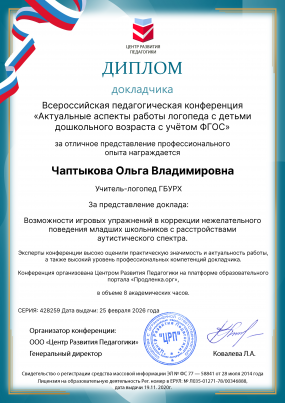


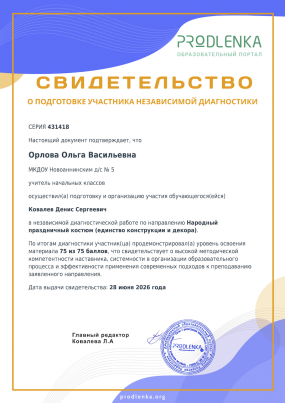



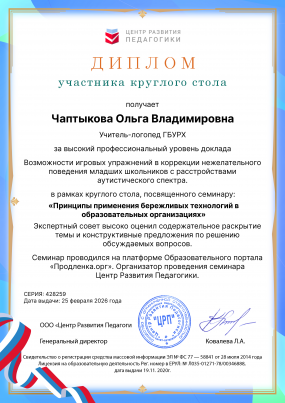


Чтобы оставлять комментарии, вам необходимо авторизоваться на сайте. Если у вас еще нет учетной записи на нашем сайте, предлагаем зарегистрироваться. Это займет не более 5 минут.